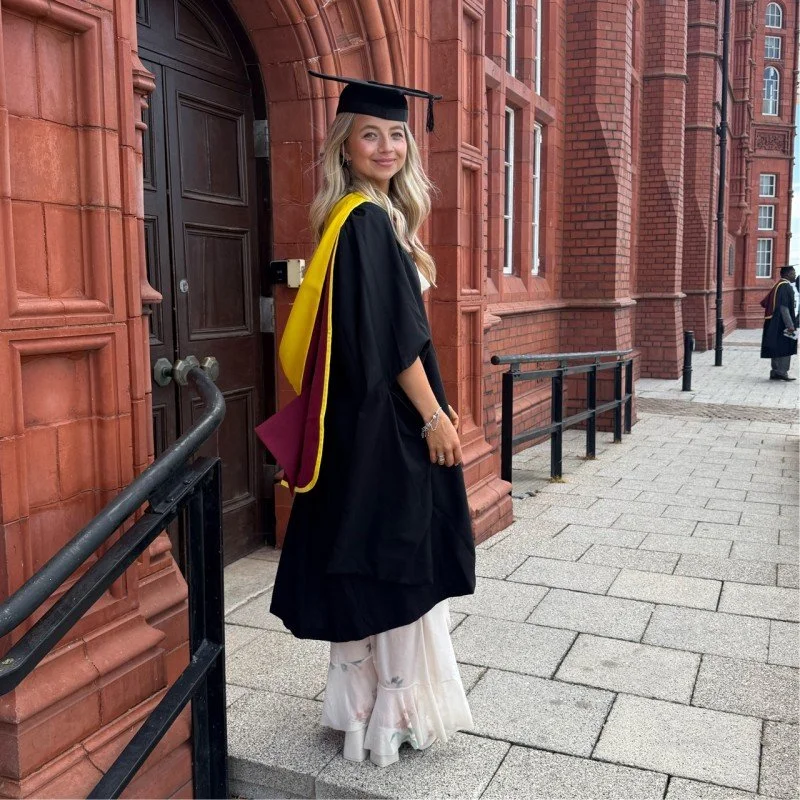
Reflective Blog: 292 Performance Conference Experience
1. Opening – How I Got There
I currently work as the Middlesex Women’s Strength & Conditioning Coach, alongside undertaking a PhD at the University of Essex exploring the determinants of bat speed in women’s cricket. Sitting between applied practice and research has shaped how I view performance, constantly balancing what the data suggests with what the athlete in front of me needs.

Over the past six months, my work has become increasingly data-driven. Through opportunities like the Collaborate Sports Advanced Data Skills mentorship with Shaun McLaren, I’ve developed stronger analytical skills and started integrating approaches such as STEN scores into our monitoring processes with Middlesex Women. It has felt like a step forward, more structure, more objectivity, more insight.
But despite that progress, there was still something missing. I was collecting data. Analysing it. Reporting it. Yet I wasn’t fully owning the decisions that should come from it.
I was then offered an opportunity by Dan Howells, Collaborate Sports founder. He provided me with the opportunity to attend the 292 Performance Conference in London. My initial thoughts were that this was far outside the comfort zone of my laptop, data, processes and workflows. Add in the context of the day - I knew I'd be in a room with practitioners with a wide range of experience, people operating at a level I aspired to reach. It felt like a big opportunity, but also a moment of exposure.
I arrived not short of knowledge, but short of understanding how to use it.
2. Expectations vs Reality
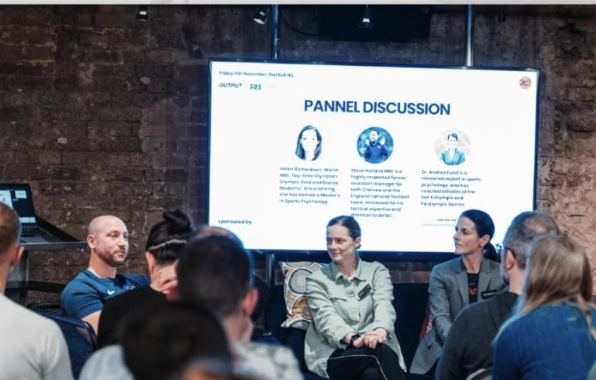
The 292 day was themed around collaborative discussion
Going into the conference, I expected a typical experience: presentations, note-taking, and passive learning. Another opportunity to absorb information and perhaps pick up a few practical ideas.
But that wasn’t the reality. 292 isn’t built like that. From the outset, the environment was discussion-based, challenging, and at times uncomfortable. There were no clear “right answers.” Instead, the room was filled with debate, practitioners openly questioning how to approach scenarios in strength and conditioning and rehabilitation.
Real-world cases were presented, but what stood out wasn’t the content; it was the conversation around it. Different practitioners approached the same problem in completely different ways, each justified through their own reasoning and experience.
It quickly became clear that this wasn’t about learning more. It was about thinking better.
The value of the conference wasn’t in the information being shared; it was in being challenged on how and why decisions get made. It highlighted something simple but often overlooked: taking one person’s idea as the way forward is rarely the solution. Working within a multidisciplinary team that embraces different viewpoints is where better decisions are made.
3. The Environment & What Made It Different
What made this conference stand out was the environment it created. It was inclusive, open, and built on shared learning rather than hierarchy. Practitioners didn’t hide mistakes or present polished success stories; they unpacked real cases, including when things went wrong, to help others learn.
That honesty is something I’ve not consistently seen in all sporting environments. It made it easier to engage. Easier to reflect. Easier to contribute.
The most powerful aspect was the level of open disagreement. Practitioners challenged each other through reasoning. Decisions had to be justified. Thought processes had to be explained.
This is what a high-performing multidisciplinary team looks like:
• Open debate
• Clear justification
• No attachment to being “right”
Seeing that dynamic in action reinforced something important for me: There is no definitive “way” of doing things in performance. There are only informed decisions, shaped by context.
It also made me realise that I hadn’t previously been exposed to this level of open discussion. And, more importantly, that I need to actively seek it out and contribute to it if I want to develop. It was a behaviour I am keen to take back into my working environment.
4. Personal Turning Point – Data → Decision Making
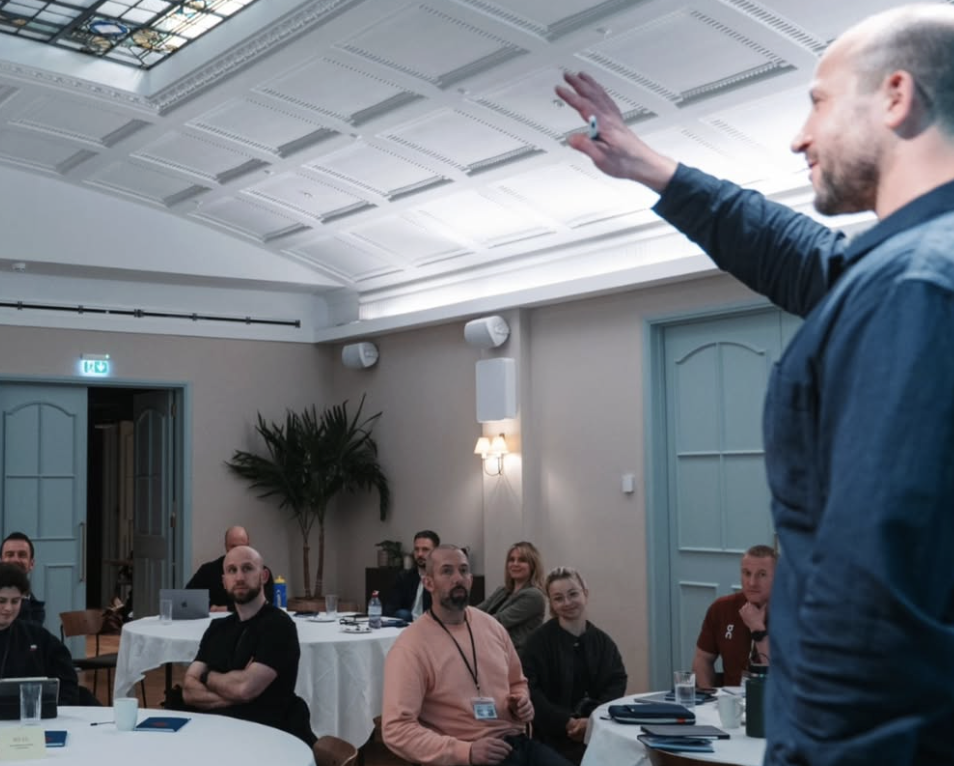
This conference marked a clear turning point in how I view my role as a practitioner. Up until now, I’ve been heavily involved in collecting, analysing and reporting data. But not fully using it to drive decisions. Through the case studies presented, I saw how experienced practitioners use data, not as an answer, but as a guide.
One case that stood out involved a footballer with recurring soft tissue injuries:
• Three injuries in 15 weeks
• 16 games missed
• Issues across the knee and hamstrings
By analysing the player’s individual norms using weekly means, standard deviations, z-scores, and STEN scores, patterns began to emerge. Spikes in total distance, high-speed running, sprint distance, and decelerations, often linked to congested match schedules, were associated with injury risk.
But what made this powerful wasn’t the data itself. It was the discussion around it.
Practitioners debated trade-offs like:
• Whether deload weeks were beneficial or potentially harmful
• The reality of elite sport requiring consistent high output
• Whether the player’s baseline capacity was simply too low
• If “spikes” were actually the problem, or a symptom of inadequate preparation
One key point stood out: the player often didn’t get injured immediately after a spike, but one to two weeks later. That delay challenged simplistic interpretations of load data.
Another crucial insight was that two games per week exceeded this player’s “normal” threshold, raising the question of whether additional sprint-based training was even necessary.
Alongside this, another discussion that stood out was how a single exercise, the squat, can be adapted across very different athlete needs. Rather than prescribing one model, practitioners broke it down based on individual qualities:
• Athlete A, who expressed poor eccentric qualities, was exposed to flywheel work and pause squats to target eccentric control
• Athlete B, lighter and lacking eccentric force but with strong power expression, used half squats and banded or Keiser-based variations to maintain power while improving control
• Athlete C, who could absorb force well but struggled to transition it, benefited from variable resistance methods like banded squats to emphasise concentric output
This was a simple example, but a powerful one. It reinforced how the same movement can be manipulated with clear intent based on the athlete in front of you.
The takeaway for me was clear: Data can highlight patterns. But it doesn’t make the decision. That responsibility sits with the practitioner.
What I recognised in myself was not a knowledge gap, but a confidence gap. I had the tools, but I wasn’t fully trusting myself to act on them.
5. Key Themes That Impacted Me
Several themes stayed with me, not because they were new, but because they were reinforced in a way that challenged how I currently operate.
Success Leaves Clues
Watching experienced practitioners work, you start to notice patterns, not in what they do, but in how they think. They question more. They justify clearly. They communicate with intent. That clarity is something I want to develop.
Debate is Essential
High-performance environments aren’t quiet. They are built on challenge. Disagreement isn’t conflict; it’s a tool for better decision-making. This made me reflect on how often I engage in, or avoid, those situations.
Individualisation Over Absolutes
No single model works for every athlete. The case studies reinforced that individual thresholds, responses, and histories matter more than team averages or generic frameworks. This aligns strongly with how I want to develop my practice.
There Is No Perfect Plan
Accepting that uncertainty is part of the job was a key shift. You don’t need perfect data to act. Waiting for certainty can often be the bigger risk.
Other case studies, even those not directly relevant to my current environment, were still highly valuable in shaping my thinking. These included:
• Off-feet conditioning to improve on-feet performance
• Optimising strength whilst minimising hypertrophy
• Athletes not sprinting enough, and how to better expose them to the specific demands required
Each added another layer to my view of transfer and specificity in performance.
6. Impact on My Practice
This experience has already started to shift how I approach my work. I want to move from describing data to acting on it. From questioning decisions to justifying them.
Practically, this means:
• Being more decisive with the data I already have
• Trusting my reasoning, even when uncertainty exists
• Focusing more on individual athlete responses rather than team trends
More broadly, my mindset has also shifted. I’m less focused on asking, “Is this right?” and more focused on asking, “Can I justify this decision?”
That feels like a more honest and practical way to operate.
7. What I Enjoyed & What Stood Out
What I enjoyed most was the openness of the environment. It didn’t feel like a traditional conference; it felt like a collaborative space where ideas were built, challenged, and refined.
Meeting practitioners from different backgrounds added to that. One conversation that stood out was with a Swiss practitioner working in bobsleigh, with whom I shared a table throughout the day. In our conversations, his philosophy came across as simple, with clarity, simplicity, and intent within it. There was no unnecessary complexity, just a clear understanding of what mattered and why. That resonated with me and made me think about my philosophies in performance and “am I overcomplicating things?”
Other elements, like exploring how tracking high-intensity zones such as Zone 6 in football relates to injury risk, expanded my view of load monitoring. It reinforced that it’s not just about volume, it’s about context and intensity within that volume.
The use of heat maps also stood out as a practical tool. I now intend to build a return-to-play framework around them, something that can visually communicate progression and provide clarity to both staff and athletes. Which I found a challenging topic in S&C prior to attending the conference.
8. What I Didn’t Do (and Will Do Next Time)
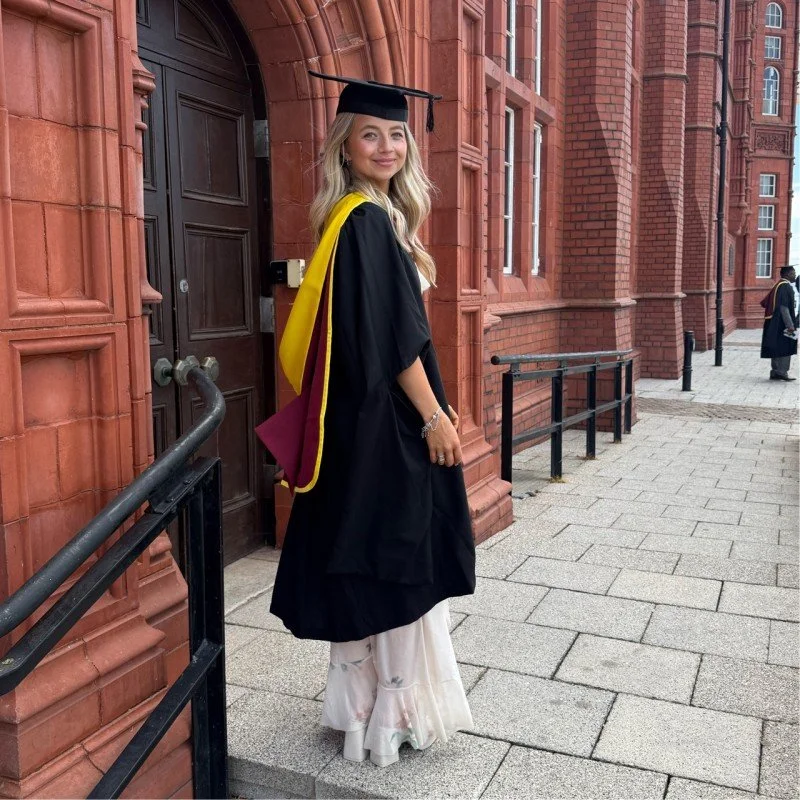
Ffion is studying and combining work and aims to use her lessons learned from the 292 perofrmance conference to complement her decisions making moving forward,
One honest reflection, I didn’t fully step into the environment as much as I could have. I didn’t ask enough questions. I didn’t challenge ideas as openly as I could have.
At times, I observed more than I contributed. While there is value in observing, development comes from engagement. Next time, I will look to:
• Be more proactive in discussions
• Engage in debate rather than sit back
• Back my thinking, even if it’s not perfect
Because ultimately, that’s the environment I want to be part of. So I’d urge others who resonate with my stage of my career, to do the same too.
9. Closing Thoughts.
This conference came at the right time in my journey. It wasn’t about gaining more knowledge. It was about shifting how I use what I already know.
I’m currently transitioning from being an analyst to becoming a decision-maker. And this experience made it clear what that requires:
• Confidence in reasoning
• Comfort with uncertainty
• Willingness to engage and be challenged
Most importantly, it reinforced a simple but powerful idea that progress in high performance doesn’t come from knowing more, but from applying what you know with intent.
There is more to be gained than lost from making a decision, especially when it is grounded in reasoning.
Thanks to 292 Performance for creating a space where practitioners can challenge assumptions, justify decisions, and learn in public. And for the opportunity proivided to me from Collaborate Sports.
If this article resonated with you, and you find yourself looking for applied, problem-solving and practical learning experiences, then consider joining us on July 26th at Collaborate 360 - our first in-person CPD event. We have expert coaches like Alex Wolf, Steve Thompson, Luke Woodhouse, Matt Sayce and Mark Taylor, all joining us to help deliver learning in a unique way. You can view the day's plans and buy your ticket HERE.