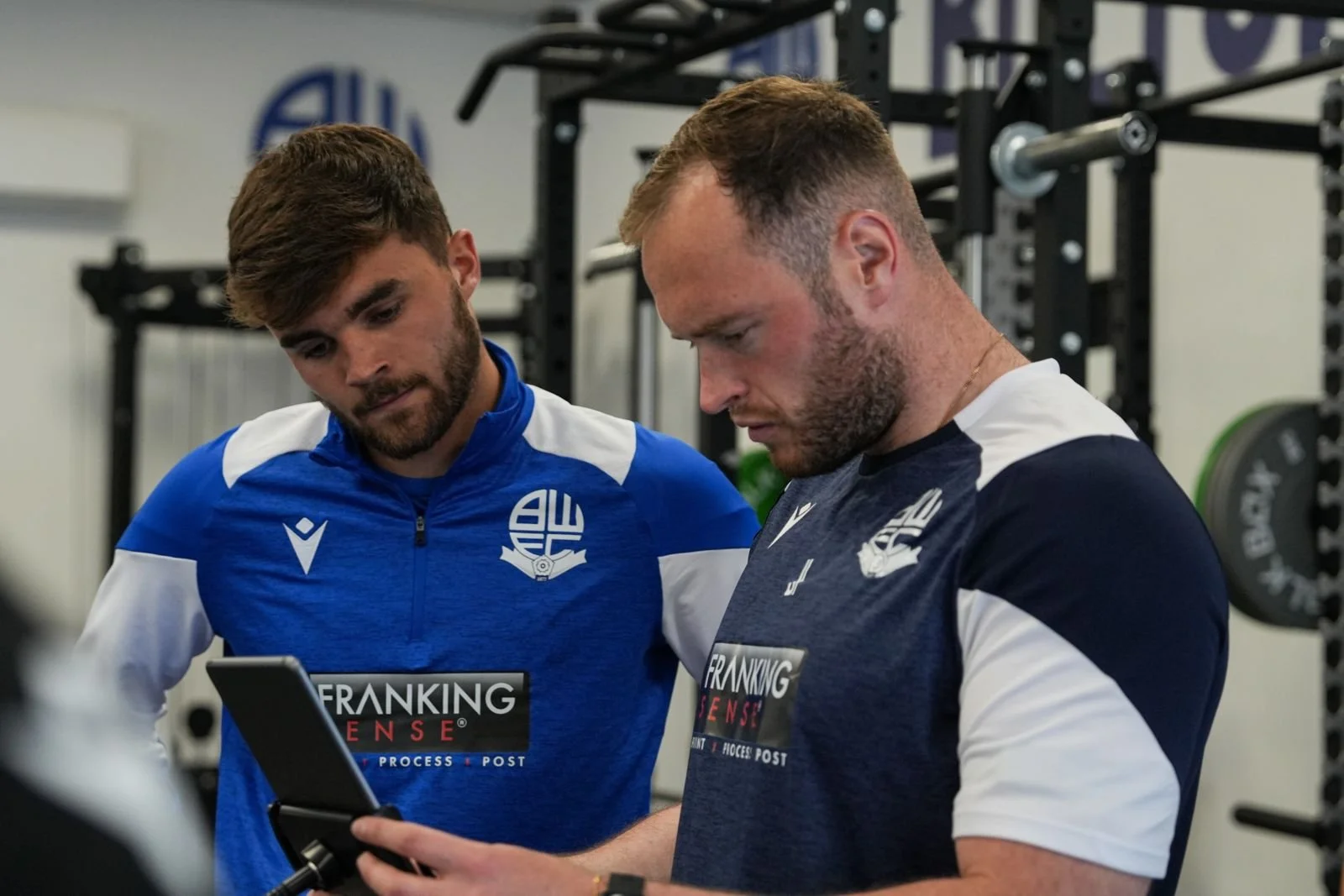
Stepping Away from Sport Temporarily….
I am pleased to welcome Jack Inman, a great coach involved in several of our mentorship programs, to share his unique experiences. Last year, Jack faced the uncertainty of stepping away from his role in sport to support his partner's career in the USA. Through reflective coaching and mentorship, we helped him navigate this decision. Now, Jack will share his journey and how it has developed him in unexpected ways.
Over to Jack!
One step back, two steps forward - Navigating identity, growth and change “Between roles” in sports performance
A Decision No One Really Talks About
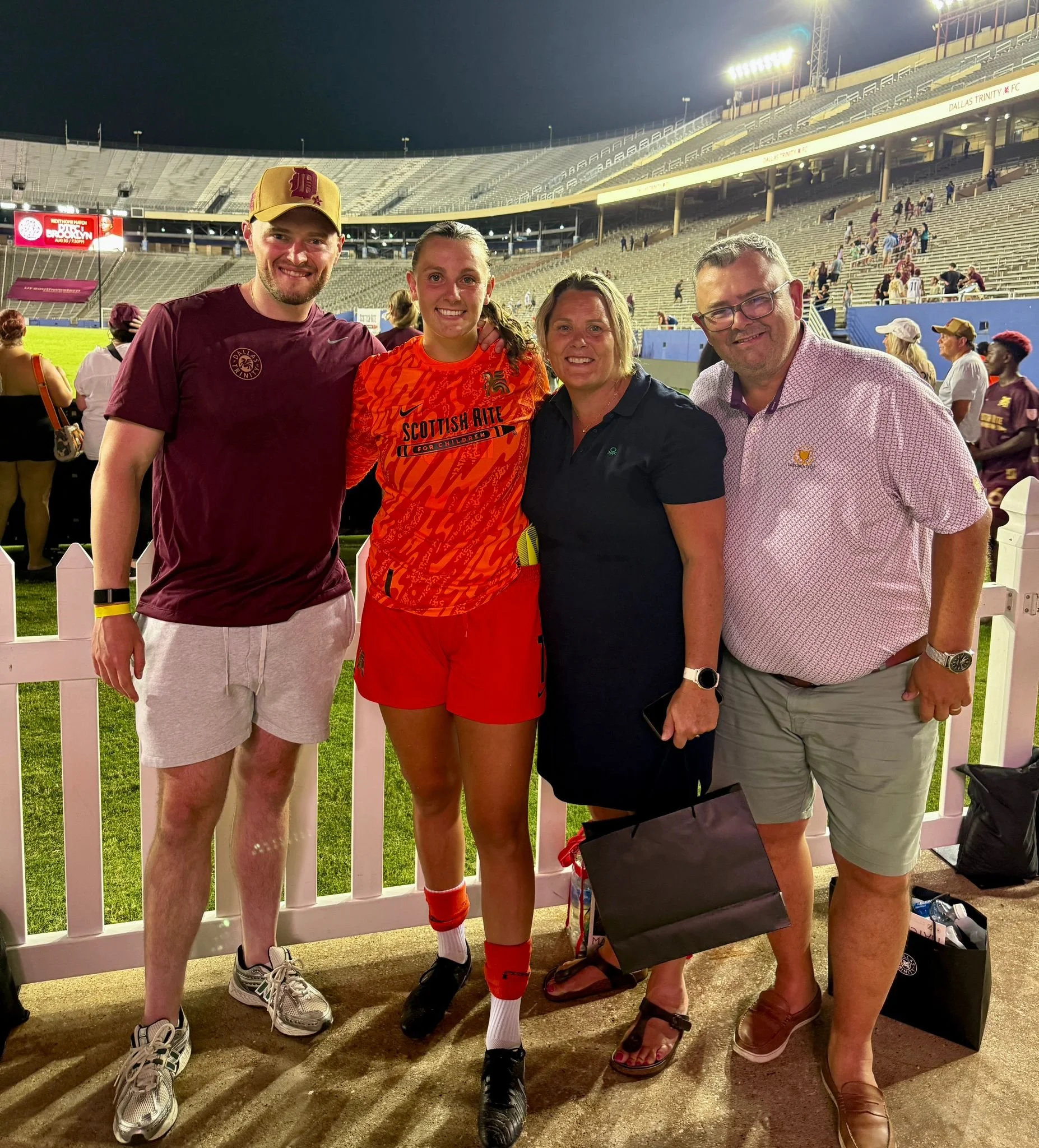
A family decision needed to be made. Suddenly my career decisions would not only influence me, but those around me too.
My partner is a professional footballer, and she had the chance to sign a playing contract in the United States. A huge opportunity for her - one she absolutely deserved. Supporting her was instinctive. I’d always fancied the prospect of living and working in elite sport in the States and chasing the “American dream,” but the reality of what this move meant for me was complicated.
The P4 visa meant I couldn't work. At all. Without gaining my own sponsorship. So this mean: No club. No coaching role to step into. No daily chaos of high-performance sport. No gym. No Identity?
Honestly, this triggered a quiet panic that I didn’t want to admit, even to myself.
Elite sport teaches you to chase momentum relentlessly. Why and how? Is there some subliminal message or conditioning in behaviour within high performance sporting teams that convinces us to keep ploughing on? To accumulate courses and certificates, grab as many experiences as possible, take on many responsibilities, and work-work-work. The hamster wheel of elite sport never slows down. I see that now.
So the idea of intentionally stepping away? It felt like voluntarily stepping out of the race and giving up my hard-earned spot in sport.
Nights were spent questioning the decision, internal questions looping:
Will I fall behind? Is this a backwards step?
Will clubs/organisations think I’ve lost focus?
Will this gap look like a weakness?
Who am I if I’m not “the S&C coach / Sports scientist” every day?
But beneath the fear, another truth began to emerge. Staying would have been an easier and safer decision.
Leaving with my partner and supporting her career meant embracing a different type of courage, one I’d never really had before. The kind that forces you to trust in your long-term trajectory, even when the short-term path feels uncertain. Once I took the approach that one step back to take two forwards is nothing to be scared of, the knot in my chest loosened.
I started to see this “change” as an opportunity for growth. This could be a career reset for me?
In truth, the work I was currently doing was putting players at the centre of every decision, but ultimately, my growth and development was left plateauing somewhat. Not because there weren’t great people around me. But because everyone was focusing on “their job” and doing it well. Time for us as individuals was at a minimum. I saw this as a chance to prioritise myself and my personal development.
So I made the decision. I handed my resignation in, to support my partner, but ultimately, to start prioritising myself again,
Arriving in the U.S.: A Blank Page in a New Country
A few weeks later, I landed in the States. I had no work programmes to write, no sessions to deliver. But I did have plenty of space! More space than I’d had in years. Space to think.
Silence, I discovered, can be both strange and healing. Instead, I sat in unfamiliar coffee shops with a notebook and an uncomfortable freedom to rethink everything. With no coaching role to step into, I had to ask myself questions that high-performance environments had rarely allowed me up to this point in my career:
What do I actually believe in as a practitioner?
What areas of my philosophy are underdeveloped?
How do I want to evolve to get to where I want to go?
What are my skill gaps?
For once, I wasn’t reacting to in the moment needs in a club environment minute by minute. I was reflecting with purpose. Over hours and days. More time than id ever had!
Building My “Think Tank”
Rather than treating this period as downtime, I have approached it like a personal high-performance project. I built what I started calling my Think Tank - a structured, intentional approach to continuous development.
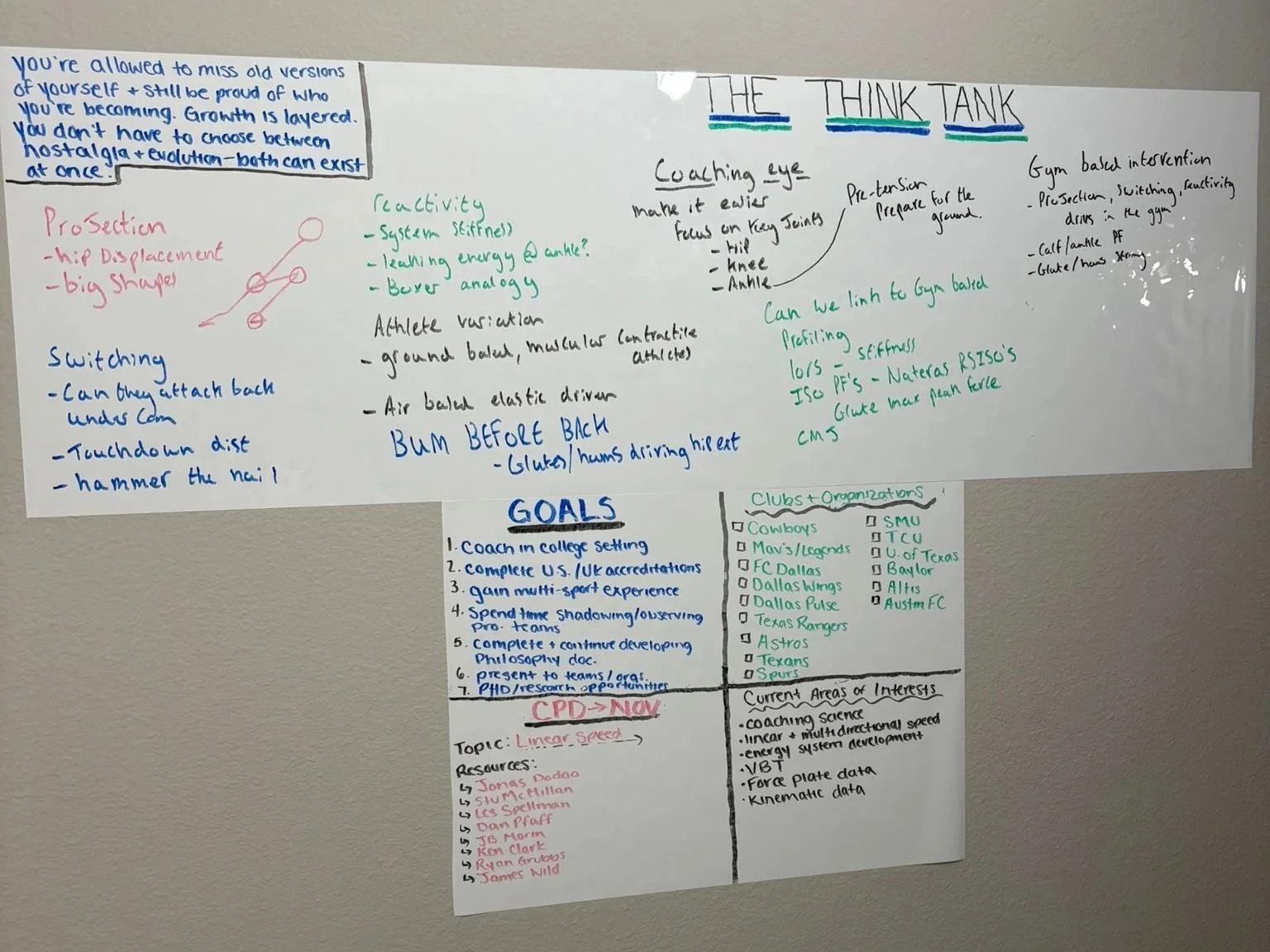
This looked like:
Deep dives into strength & power, speed development, and coaching science
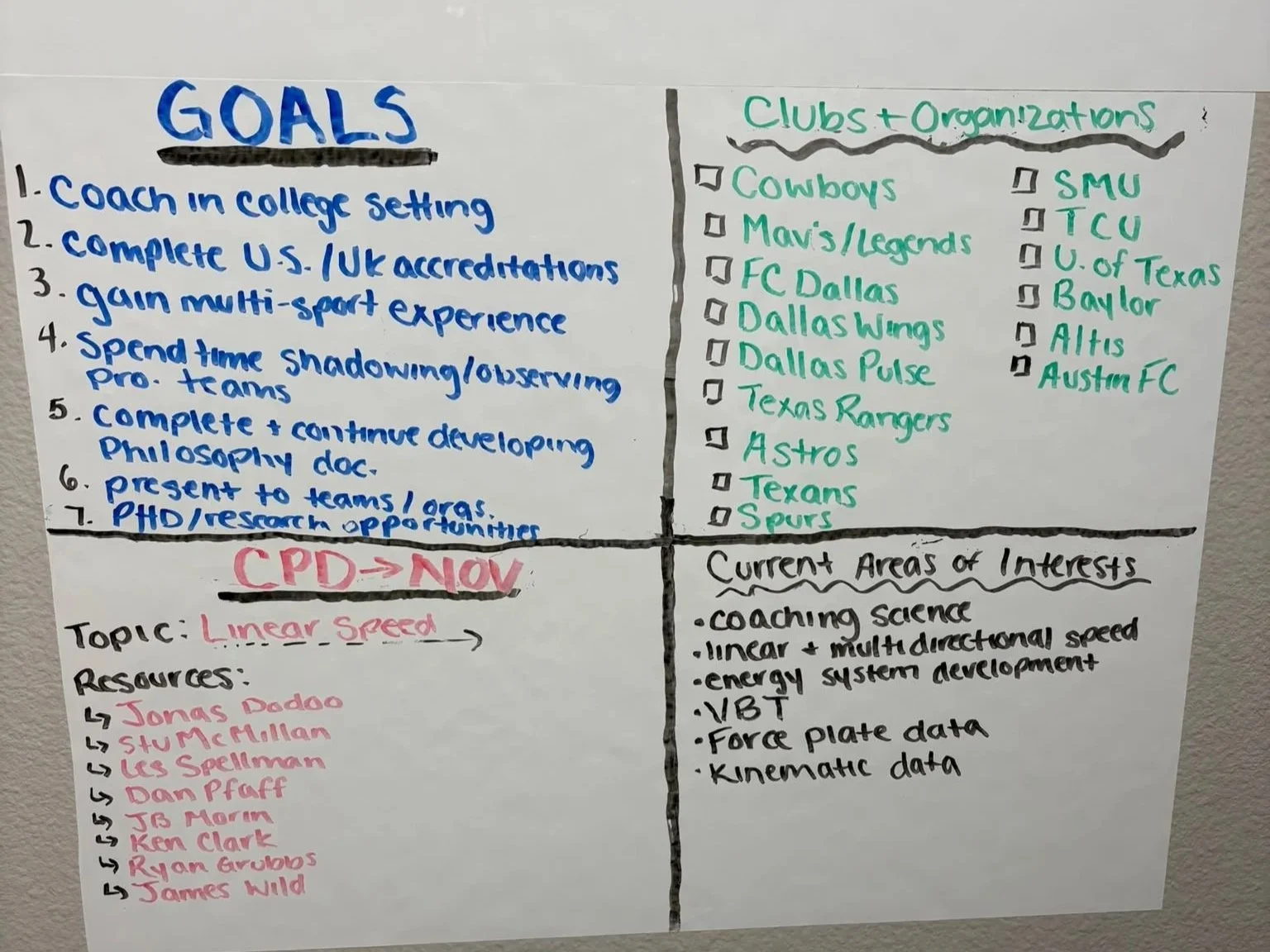
○ With help from practitioners such as Pete Burridge, I built a hit list of experts in different areas. For example, my most recent CPD month was all about Linear speed, I listened, watched and read work by Jonas Dodoo, Stu Mcmillan / Altis, Les Spellman and James Wild, plus many others. Ticking off names throughout the month. Podcasts, webinars, articles. Writing thoughts and ideas into the think tank
Revisiting and refining profiling systems
○ Frameworks to develop my coaching eye when viewing linear sprinting, LTAD models, Force plate metrics I consider important, coaching language and reflection frameworks.
Performing a needs analysis of different sports as if I were involved.
○ I’d pick a sport, and an athlete and create a hypothetical needs analysis of the sporting demands, positional demands and athlete demands, then create training objectives, ask how I would monitor it, and what would success look like?
Studying different methodologies - Compare and Contrast!
○ I had the opportunity to observe women's soccer and basketball in person and see how the demands and schedule differ to what I was used to in mens soccer. For
example, seeing how people operate with no GPS in basketball, but instead with LPS as an indoor method for load tracking.
Developing case studies, a philosophy document and hypothetical scenarios to sharpen decision-making
○ I began treating my CPD as if I were to present at the end of each month. I’ve heard Sophia Nimphius speak about this. For example, after my Linear speed month, I designed a “Why linear speed is important in team sports” document and shared it online.
Expanding my network across U.S. collegiate, professional, and private-sector performance environments
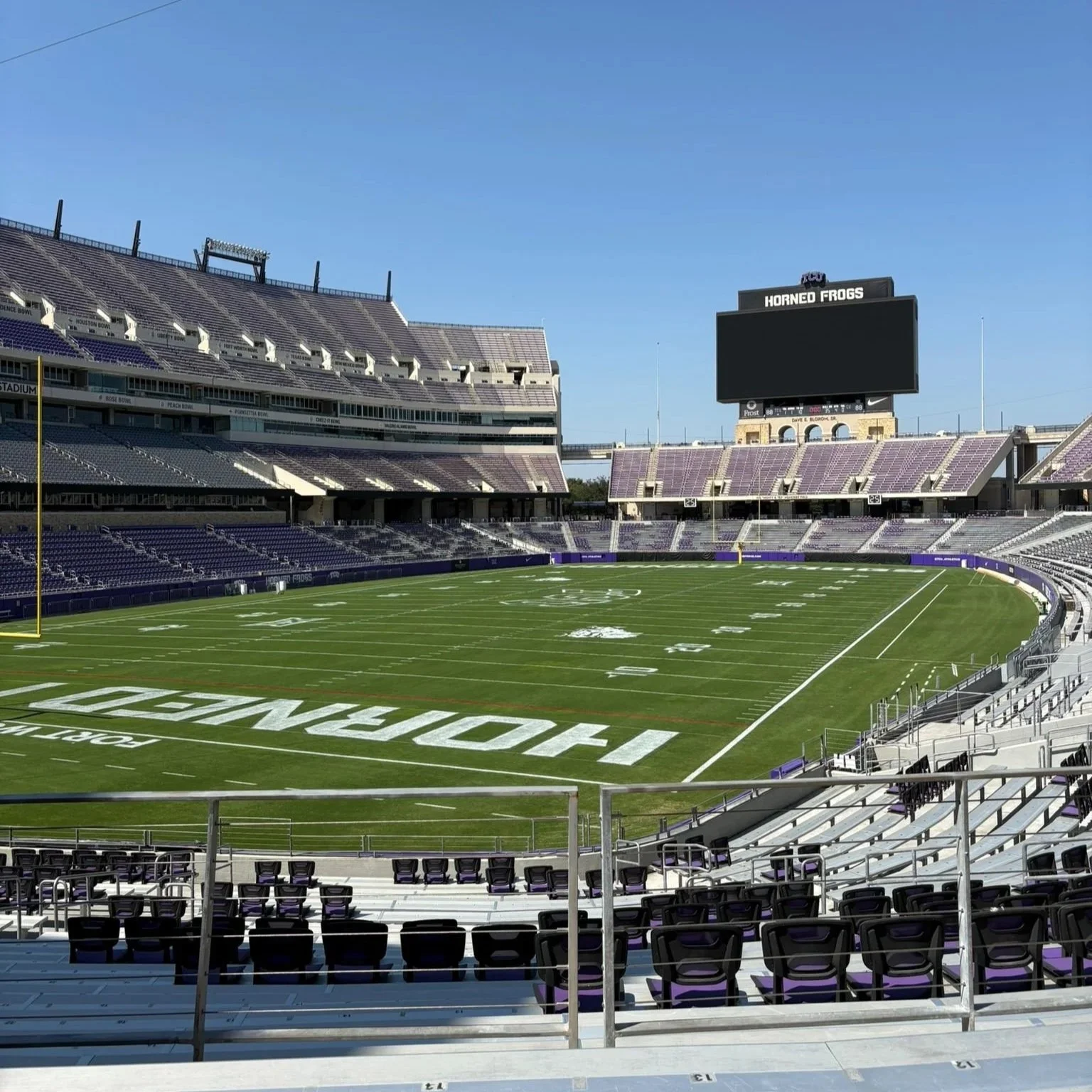
○ I had the chance to visit SMU, TCU and UTD colleges. As well as the Texas Legends G-League basketball team. All novel and new experiences culturally for me as much as technically.
It has been the most intellectually expansive period of my career.
No time pressure. No reactive decisions. Just deliberate, structured growth.
The Harder Side of the Story: Routine, Envy, and Honesty
Of course, it wasn’t all reflection and growth. There are days when the silence feels less like space and more like a void. I struggle with the lack of structure sometimes.
For someone used to early alarms, packed schedules, and the constant hum of a team environment, the open, unplanned days were emotionally heavy.
And if I’m honest, there were moments of envy too.
Watching my partner head out each morning to training to do what she loves, while I stay home with my laptop and my thoughts… that wasn't easy. I am proud of her. But pride and envy can coexist, and pretending otherwise only makes it harder.
There are days I still feel behind. Even though Ive absorbed more in the last 6months than in my whole career before. Some days I question whether stepping away was the right decision, even though I know it was. Those feelings have led to tough conversations and honest ones:
Admitting I felt lost without work
Admitting I felt jealous at times
Admitting I missed the identity that came with being “in the environment”
Admitting I was scared my career would stall
Admitting the guilt I felt for having those emotions in the first place
In those moments, I learned something important:
Growth isn’t just professional. Sometimes it’s emotional first.
And navigating that emotional landscape made me more self-aware, more grounded, and ultimately more prepared to return to the elite environment with a deeper sense of who I am.
The Irony: Finding the Curiosity I Wish I’d Had at the Start
One reflection has kept surfacing throughout this period: I wish I’d had this mindset of broadening my horizons and experiences at the very start of my career. I never chased internships or working with different sporting populations. Essentially I just cruised. I stuck with football because it's what I liked as a fan. I had emotional attachment to it.
Was I blinded by performance as a result?
What I didn’t realise was how much “gold” lives in the gaps:
Coaching different age groups
Working across multiple sports
Exposing myself to a diversity of movement and skill demands
Learning from coaches with completely different backgrounds
Spending hours experimenting, failing, adjusting, and trying again
This period in the U.S. when I couldn’t work has ironically given me back something I didn’t even realise I had lost: Curiosity.
The pure curiosity that gets coached out of you when your schedule becomes more important than your growth. There are days I wish I could go back and tell my younger self: “Slow down. Explore more. Don’t rush into one lane too early. Expand your horizons”
But maybe that’s the point. Maybe this chapter arrived exactly when it needed to.
Looking Ahead With Purpose, Not Pressure
Now, as I prepare for the next step in my career, I don’t feel behind. I feel ready.
More grounded. More intentional. More complete.
This chapter has taught me that growth doesn’t always come from staying in motion. Sometimes it comes from being brave enough to pause. Sometimes it comes from choosing a different path for the right reasons - career-wise and personally. Sometimes it comes from supporting someone else’s dream so you can grow into yours.
And sometimes, your biggest step forward begins with the courage to take one step back.
With all of these reflections, if anyone is reading this, wondering if they need a change, my advice would be that growth happens when we are most uncomfortable. So, leap if it's right for you. Don’t be afraid of the silence, embrace it!
Thanks so much to Jack for sharing his rare insights to something many practitioners may need to face at some point in their careers. Having read the article, some reflective questions you can ask yourself to learn more from what Jack has shared are:
How much of your identity is tied to your current role or environment, and what would shift if that role was taken away?
When was the last time you intentionally created space to think, reflect, and develop without reacting to daily demands?
If you stepped away tomorrow, what gaps in your knowledge, philosophy, or skill set might be exposed?
What would “one step back to take two steps forward” look like in your own career?
If you need support in the area of career decisions or uncertainty - reach out to us for a discussion at info@collaboratesports.com
If taking a proactive approach to CPD is something you’d like to challenge yourself with, join us in July at our Collaborate 360 event - more details HERE