Beyond the Sets and Reps
How Support and Challenge Strengthen Programming Decisions
Co-written by Dan Howells & Finn Ducker
Introduction - by Dan
One of the biggest challenges in strength and conditioning today isn’t the science - it’s helping coaches develop the confidence and clarity to apply that science under pressure, in real time, with real athletes, in real environments.
Most coaches aren’t short on knowledge. They’re short on support, collaboration, and the right kind of challenge.
S&C programming isn’t simply a technical exercise. It’s a decision-making process shaped by experience, constraints, communication, and the ability to adapt while still maintaining clarity of purpose. But too often, coaches try to develop this process in isolation, relying only on intuition, Instagram templates, or guesswork.
At Collaborate Sports, our mentorship model is built around helping coaches think, not just prescribe. That means creating environments where practitioners are supported enough to feel safe bringing their real problems, and challenged enough to grow beyond their current level.
This article captures that story through the experience of one of my client coaches - Finn Ducker - whose mentorship journey with us has reshaped the way he programmes, communicates, and adapts for his athletes. His reflections highlight exactly why support + challenge are essential ingredients in the development of confident, adaptable practitioners.
Below is Finn’s story, in his own words. I’ve loved working with him. I hope you love his storytelling too.
The Power of Mentorship in Programming - by Finn Ducker
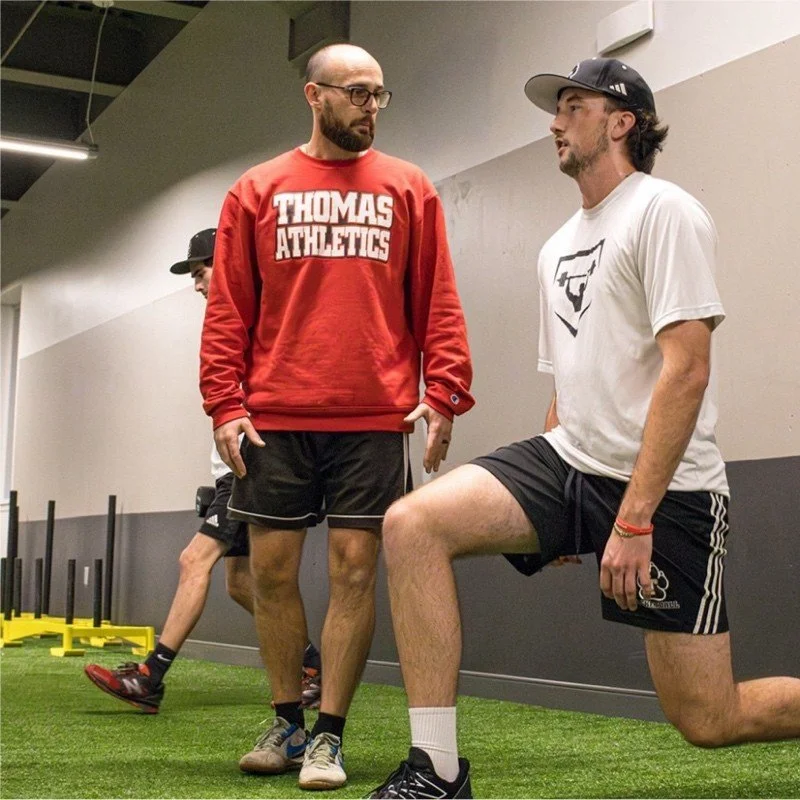
Why I First Sought Mentorship
My motivation to pursue mentorship came from one simple place: I realised I’d plateaued. I wasn’t going backwards, but I wasn’t progressing at the rate I knew I needed to. I had knowledge, ambition, and work ethic - but I didn’t have the guidance or challenge to turn that into clear, confident programming.
I wanted to learn from more experienced minds. I wanted someone to help me refine my thinking and sharpen my practice. So I entered my first mentorship experience a few years back hoping for exactly that -only to walk away feeling surprisingly unfulfilled.
The problem wasn’t the mentor. It was the format. It was one-directional.
I asked questions. The mentor answered. Then we moved on.
There was no collaboration, no discussion, no challenge, no reflection. I left that programme feeling like something important was missing.
That’s when I found Collaborate Sports and enrolled in The Optimsing Soft Skills Mentorship with Dan.
What Real Mentorship Felt Like
From the very beginning, the experience was different. Every session invited open dialogue. The group dynamic was far from passive - it was active, exploratory, challenging, and supportive. With Collaborate Sports’ approach, I found a mentorship that was inclusive, challenging, supportive, and full of learning.
Instead of consuming information, I participated in developing it.
Instead of waiting for answers, I learned to ask better questions and leaned in to that new skill more.
Instead of performing competence, I was encouraged to practice vulnerability.
It was so powerful that after the group mentorship ended, I moved straight into 1-on-1 mentorship with Dan, to dig deeper into my own challenges.
Digging Into My Programming Decisions
One area I wanted to explore was my programming decision making in the weight room. I knew I wasn’t programming poorly - but I also knew I could be programming with more clarity and intention.
In the 1-on-1 setting, we broke my process down until the gaps became obvious. I realised that I often relied on instinct instead of structure. I had exercises I liked, methods I leaned on, and habits that shaped my decisions, but I didn’t have a consistent framework guiding me. That framework turned out to be the missing piece.
I remember Dan sharing something along the lines of: “Working inside a framework reduces guesswork, provides clarity, and ultimately best serves your athletes’ needs”
We explored a wide range of concepts, and working with Dan helped reduce the uncertainty, and made what I perceived to be often complex, quite simple. We delved into adaptation frameworks and took “sets and reps” to whole new level of understanding. I was challenged to start thinking beyond numbers, and more towards physiology.
Suddenly, my thinking became:
Adaptation first -> what outcome (physiologically) are we trying to achieve?
Method second -> what load is required to stress this desired adaptation? is the best way to load or stress the athlete given their constraints?
Exercise third -> what exercise is the best way to load or stress the athlete given their constraints?
This shift changed my coaching dramatically.
Flexibility Inside a Framework
The biggest breakthrough for me was understanding that two athletes can use two different approaches to reach the same adaptation. That may sound simple, but it completely changed the way I think, prescribe, and coach. Before, it felt like the exercise was the adaptation. Now, the adaptation guides the exercise.
This helps me respond to athlete needs without compromising the purpose of the session. And the best example of this came only hours after this mentorship conversation about adaptation-led programming.
The Sled Push Moment
Earlier that day, Dan and I discussed programming within constraints - how goal clarity frees the coach to adapt, and how the right alternative exercise can still deliver the same adaptation.
That afternoon, one of my teams came in for a strength session. A handful of athletes were experiencing back pain/soreness, with a squat pattern on the program. This wasn’t uncommon, but disruptive as many coaches can emphasise with!
Previous-me might’ve avoided the risk, adjusted the load slightly, or avoided squatting entirely. Now, with adaptation-first thinking, the solution was obvious. My clarity of thought was:
We needed strength as an outcome. That shouldn’t change.
We needed load to create necessary stress to adapt.
We needed safety based on some constraints we now faced.
We also needed athlete buy-in.
Given the equipment I had available, I offered an alternative: Heavy sled pushes.
I explained why we were using this alternative, relating it to their overall goal, and the need for a specific intensity of work.
The athletes bought in immediately, and the quality of training skyrocketed. These athletes have consistently been loading their sled pushes with more weight and developing their strength in a slightly different, but equally effective way. Although we may move back to squatting the next week, the benefit was clear to athletes. As a coach, I now had the ability to modify training, without compromising intensity.
This moment cemented the adaptation way of prescribing in my mind.
What All This Meant for the Athlete Experience
Not long after these mentorship sessions, one of my athletes sent me a message that brought everything full circle. It reminded me that programming isn’t just about physical development - it’s about how athletes feel, think, and grow through the process.
Below is an excerpt from her message:
“I realized I've never taken the time to express how much your support has meant to me… Every time I walk into that weight room, you challenge me to work in the right way. But behind that, you're teaching me resilience, confidence, and the ability to push past limits I used to put on myself. You know when I show up tired, stressed, or doubting myself and you coach me through it, and find ways for us to still achieve what we need to achieve. I’ve never had that type of support before.”
Closing Summary — by Dan Howells
What Finn describes is exactly what effective mentorship is designed to achieve.
Programming isn’t the art of picking exercises. Programming is the art of thinking clearly, responding intelligently, and coaching purposefully.
And coaches can only develop that clarity when they are exposed to:
the right level of support
the right level of challenge
structured reflection
shared dialogue
…and the opportunity to test ideas against real problems
When coaches gain clarity, athletes gain confidence. When coaches develop strong decision-making, athletes develop trust.
Reflective Questions for Coaches
These questions are designed to deepen your own programming practice after reading Finns contributions to this article:
1. Am I programming exercises, or am I programming adaptations? Are you choosing movements because they’re familiar — or because they serve a specific purpose?
2. Do I have a clear decision-making pathway? Could you explain the logic behind your programming choices if someone asked?
3. How adaptable am I in real time? What do you do when an athlete can’t perform the intended exercise?
4. How much of my programming is structured vs. instinctive? Both matter, but structure should guide instinct, not the other way around.
5. Who challenges my coaching decisions? If the answer is “no one,” growth will always be slower.
As we move into 2026, how are you challenging yourself to grow and develop?
We have our group mentorship programs available now for enrolment starting in April - whether your skill gaps are in Rehab, Soft Skills, S&C, Data, or LTAD, we have ways we can help. We have a giveaway where you can WIN a free place on a program of your choice, receiving 6months mentorship! Apply HERE!